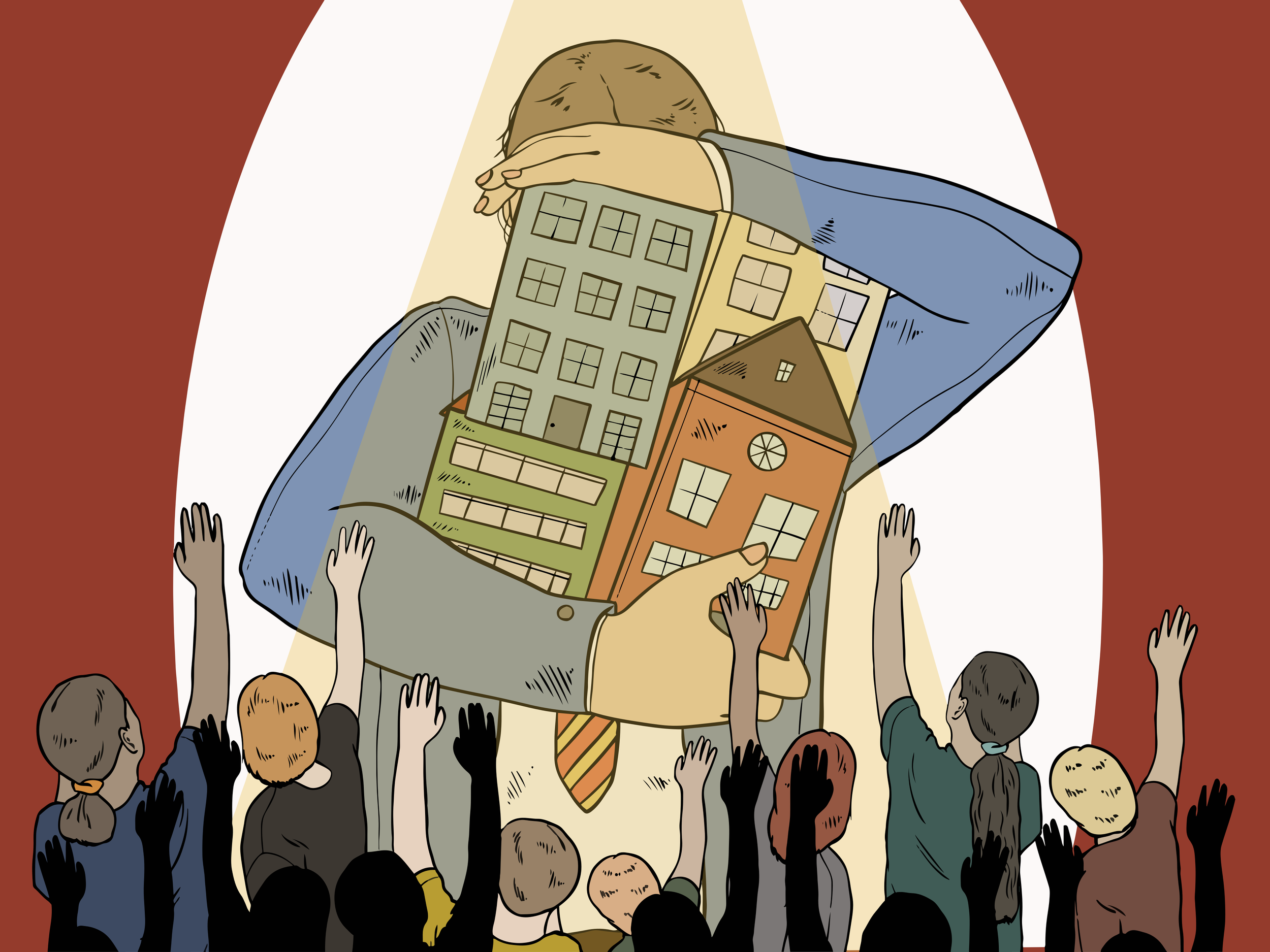
NEO-LIBERAL ZOMBIES, THE MISSING MIDDLE, & THE THIRD SECTOR
My book is a timely and provocative intervention into one of the most consequential conversations of our time. It confronts the reality of housing market inequality and disarray in New Zealand, using plain language and visual cues to make technical concepts accessible to a broad audience. I posit valid arguments about the role of the state, the limits of markets, and the possibility of a different kind of housing system (operating in parallel with the status quo). Compelling comparisons between the local context and third sector housing policy interventions in exemplar European states that achieve better and more socially diffuse outcomes offer a glimpse of what can be achieved if we just step off the neo-liberal road to nowhere.

WHAT THE BOOK CARRIES
A clarity that cuts through technical complexity
A consistent theme in my book is that for-profit private sector actors will never deliver affordable housing for those in society who need it most because “they're in it for the money”. This is not cynicism but rather is clarity built on deep industry experience and fresh thinking based on independent research. I’ve taken care to not distract the reader with technical jargon or econometric ‘smoke and mirrors’.
A bridge between hope and action
A central metaphor in my book is that our politicians (on both the right and left) resemble zombies stuck on the road to nowhere — caught in the headlights of a neo-liberal theocracy and unable to move forward or even back to a time when we had a collective social conscience. I have endeavoured not dwell on critique and posit practical solutions based on international exemplars for achieving improved housing outcomes. These include: a pan-political modus vivendi, spatial planning focused on outcomes rather than just growth, proactive state and municipal actors, and access to low-cost funding tools and land for not-for-profit housing actors. My book carries hope but is grounded in evidence not wishful thinking or political slogans.
A voice for the “missing middle"
The "missing middle" in my book title refers to low to middle income segments of society who are overlooked by both the state and for-profit developers. The narrative carries the experience of those who earn too much to qualify for social housing but too little to afford market prices. It gives name and shape to a group that is often invisible in policy debates and in housing and planning legislation, and it insists that their needs matter.
A timely reminder that housing is not a commodity, it is a societal foundation
My research reframes housing not as an asset to be traded or an investment to be maximised, but as a foundation for human life. The “third sector” model highlighted follows social imperatives rather than commercial ones, with tenure based on cost rather than market price, and surpluses reinvested into new affordable housing initiatives. This teaches that the way we structure housing systems reflects what we value as a society. If we treat housing as a commodity, we will get the outcomes that commodification produces. If we treat it as a foundation, we can build something different.
An intellectual curiosity to learn from best-practice
Rather than simply critiquing New Zealand's housing system in isolation, my research examines countries that have achieved better market stability and more socially diffuse outcomes, and asks: what did they do differently? This carries an intellectual curiosity to learn from others, and a practical rigour to translate those lessons into a framework that could be applied in New Zealand (or anywhere for that matter).
A cautionary tale that the problem is not due to a lack of solutions, but a lack of political will
My research shows that countries with a significant proportion of not-for-profit housing stock exhibit lower house price inflation, lower housing overburden costs, and less market price volatility than New Zealand (where the share of not-for-profit housing is <4%). The solutions exist and have been proven over decades. What is missing is the collective will to implement them. This brings into focus the most significant barriers to better housing outcomes which are not technical but political and ideological.
A commitment to the wider public good
I’ve made my book available free for non-commercial use. Whilst some might see this as a small detail, it is a statement about who should have access to the knowledge. My book carries a commitment to the wider public good that mirrors the housing principles I advocate for.
© 2024-2026 Níall Mayson. All rights reserved.READ IT FOR FREE ON ANY DEVICE
Download PDF
Download ePUB